Compressed air is one of the most critical utilities in modern industrial operations. It powers automation, controls instrumentation, and supports sensitive production processes across industries such as pharmaceuticals, electronics, and food processing. While often treated as an invisible utility, the quality of compressed air has a direct impact on operational efficiency, equipment longevity, and product quality. One of the most important factors affecting air quality is moisture, which can silently damage pipelines, valves, instruments, and end products.
Managing moisture effectively requires not just reactive measures but real-time, accurate monitoring. Facilities that rely on intermittent checks or assume their dryers and filters are performing optimally risk unexpected downtime, contamination, and energy inefficiencies. Continuous dew point monitoring is therefore essential to maintain the integrity of compressed air systems and prevent costly operational disruptions.
Understanding Dew Point and Compressed Air Quality
Dew point is the temperature at which water vapor in compressed air condenses into liquid. When compressed air contains too much moisture, it can cause corrosion, microbial growth, freezing in cold environments, and operational inconsistencies in sensitive equipment. In industries with strict quality standards, such as pharmaceuticals and electronics, even small deviations in dew point can lead to product defects, regulatory compliance issues, or equipment failure.
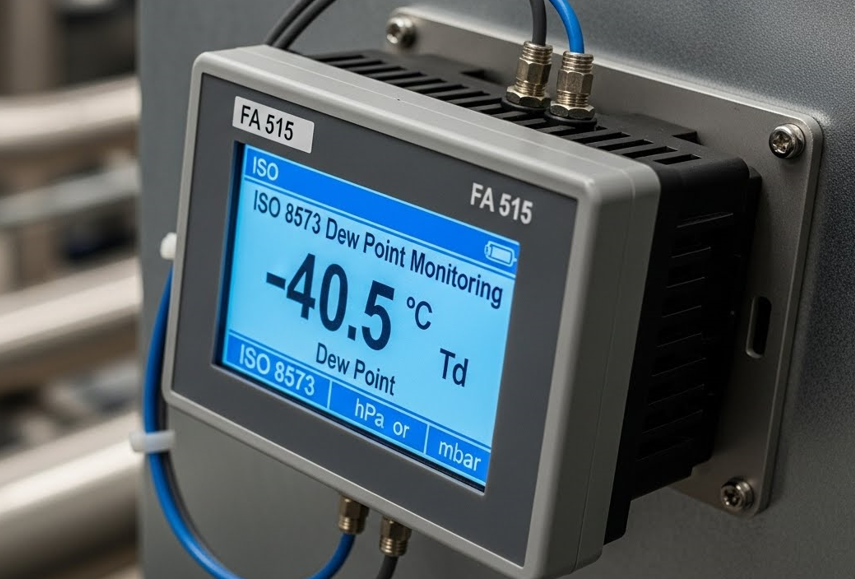
This is where FA 515 ISO 8573 Dew Point Monitoring becomes indispensable. This system is specifically designed to continuously measure and report the dew point of compressed air according to ISO 8573 standards. By providing real-time, accurate data on moisture levels, it allows operators to make informed decisions, optimize dryer performance, and maintain compliance with industry regulations. Instead of relying on assumptions or periodic inspections, facilities gain continuous visibility into the condition of their air systems.
The Importance of ISO 8573 Standards
ISO 8573 is the international standard for compressed air quality, defining allowable levels of particles, water, and oil in compressed air systems. Adhering to these standards ensures that air used in production processes is clean, dry, and safe for sensitive applications. Dew point monitoring is a key part of maintaining compliance, as it directly relates to the water content in the air.
The FA 515 system provides operators with the data necessary to meet ISO 8573 specifications. With continuous monitoring, it is possible to detect deviations in air quality before they become operational or regulatory issues, ensuring that compressed air meets the stringent requirements of high-quality production environments.
Benefits of Continuous FA 515 ISO 8573 Dew Point Monitoring
Implementing continuous dew point monitoring using the FA 515 offers numerous benefits:
-
Proactive Maintenance: Detect moisture breakthroughs and dryer inefficiencies before they cause damage.
-
Operational Reliability: Maintain consistent air quality to protect equipment and prevent downtime.
-
Energy Efficiency: Optimize dryer performance to avoid over-drying and unnecessary energy consumption.
-
Regulatory Compliance: Provide documented evidence that compressed air meets ISO 8573 standards.
-
Improved Product Quality: Ensure that air used in production is free from moisture-related contamination, protecting sensitive processes.
These benefits allow facilities to move from reactive maintenance to a predictive, data-driven approach, saving both time and costs while increasing overall productivity.
How FA 515 Works in Real-World Applications
The FA 515 ISO 8573 Dew Point Monitoring system is designed to operate in harsh industrial environments. It can be installed in compressor rooms, distribution pipelines, or at critical points of use. Its sensors provide continuous, high-precision measurements of moisture content in compressed air, even under fluctuating pressures, temperatures, or contamination levels.
Real-time monitoring allows operators to adjust dryer settings, replace filters proactively, or optimize air treatment systems. By providing actionable data, the FA 515 enables industrial teams to make operational improvements that reduce downtime, protect equipment, and enhance energy efficiency.
Protecting Equipment and Extending Lifespan
Moisture is one of the leading causes of equipment wear and failure in compressed air systems. Corrosion, sticking valves, and water accumulation in tools or instruments can lead to frequent maintenance and costly replacements. Continuous dew point monitoring mitigates these risks by alerting operators to rising moisture levels before damage occurs.
With FA 515 ISO 8573 Dew Point Monitoring, facilities can implement preventive maintenance programs that are based on real operating conditions rather than fixed schedules. This proactive approach extends the lifespan of dryers, compressors, valves, and sensitive equipment, ensuring long-term operational stability.
Energy Optimization and Cost Savings
Compressed air systems are among the most energy-intensive utilities in industrial facilities. Dryers consume significant amounts of electricity, and inefficient operation can lead to excessive energy costs. By continuously monitoring dew point, operators can optimize dryer performance to match actual air quality needs.
The FA 515 system ensures air is adequately dry without over-drying, reducing electricity consumption and operational costs. Over time, these improvements translate into meaningful energy savings and contribute to more sustainable operations.
Integration with Modern Industrial Systems
Modern manufacturing facilities rely heavily on automated monitoring and control systems. The FA 515 can be easily integrated into these systems, providing live dew point data alongside other metrics like flow, pressure, and energy usage.
This integration allows operators to view a complete picture of compressed air performance, identify inefficiencies, and implement process improvements. Its low-maintenance design and long-term stability make it ideal for continuous industrial operation, minimizing downtime and maximizing reliability.
Proactive Risk Management
Moisture-related problems in compressed air systems often develop gradually, going unnoticed until they cause equipment damage or production issues. Continuous FA 515 ISO 8573 Dew Point Monitoring acts as an early warning system, providing timely alerts when moisture levels rise beyond safe limits.
Early detection reduces operational risk, protects critical equipment, prevents contamination, and ensures uninterrupted production. It allows maintenance teams to act before issues escalate, saving both time and money.
Trusted Industrial Support with JAMs
Technology alone is not enough; expertise and support are critical for long-term success. Jams provides reliable industrial measurement solutions, including the FA 515 ISO 8573 Dew Point Monitoring system. With a focus on accuracy, reliability, and customer support, JAMs helps businesses implement effective dew point monitoring strategies and optimize their compressed air systems for efficiency and compliance.
Conclusion
Moisture in compressed air may be invisible, but its impact on operations is significant. Accurate, continuous dew point monitoring is essential to protect equipment, maintain product quality, improve energy efficiency, and ensure compliance with ISO 8573 standards.
The FA 515 ISO 8573 Dew Point Monitoring system, supported by professional solutions from Jams, empowers industries to manage compressed air proactively. By providing real-time, reliable data, it transforms compressed air management from a reactive process into a predictive, strategic approach—ensuring operational reliability, efficiency, and long-term performance.