
How a pneumatic diaphragm pump works
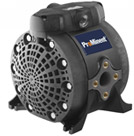
Compressed air enters the air motor and shifts pressure between chambers behind the diaphragms. As one diaphragm is pushed out, the opposite side creates vacuum, opens the suction ball valve, and fills the chamber. When the air valve shifts, that chamber discharges through the outlet ball valve.
This double-diaphragm action creates a steady pulsating flow that handles high solids and changing viscosities without the impeller limits of centrifugal pumps.