Compressed air dryers are installed to solve one major problem—moisture. Yet many systems operate blindly, assuming the dryer is doing its job without actually verifying results. In reality, even a well-sized dryer can underperform due to load changes, aging components, or improper settings. This is where dew point measurement becomes the backbone of true compressed air quality control.
In modern industrial environments, relying on assumptions is risky. Moisture-related issues don’t announce themselves loudly; they build quietly through corrosion, pressure losses, microbial growth, and damaged equipment. By the time visible symptoms appear, production efficiency has already suffered. Accurate dew point monitoring transforms this uncertainty into control, giving operators real-time insight into dryer effectiveness.
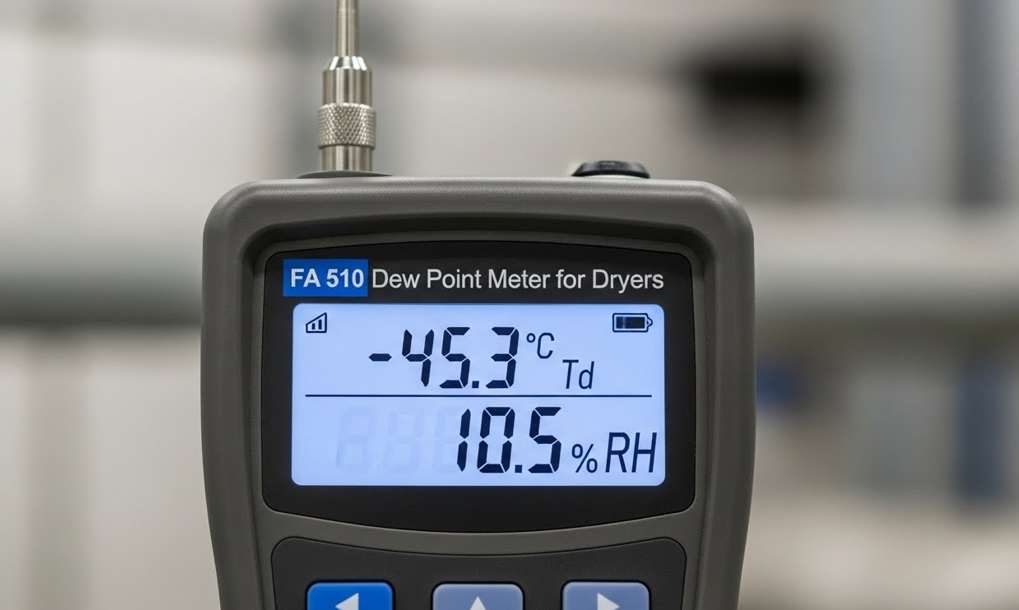
This is exactly where the FA 510 Dew Point Meter for Dryers proves its value. Designed to deliver precise and stable readings, it allows industries to verify dryer performance continuously instead of reacting after failures occur. With reliable data at hand, facilities can protect their systems, products, and processes with confidence.
Why Dew Point Matters More Than Dryer Type
Many facilities focus heavily on choosing between refrigerated, desiccant, or membrane dryers. While dryer selection is important, performance verification is even more critical. Two identical dryers can deliver very different results depending on operating conditions, maintenance quality, and air demand fluctuations.
Dew point measurement tells the real story. It shows whether the air leaving the dryer is truly dry enough for its intended application. This insight is essential for industries where even small moisture variations can lead to quality defects, equipment malfunction, or compliance issues.
FA 510: A Practical Solution for Real Dryer Monitoring
The FA 510 is built specifically for monitoring dryer output with high accuracy and consistency. Rather than offering generic measurements, it focuses on providing dependable dew point values that reflect actual air conditions downstream of the dryer.
Its measurement stability is one of its strongest features. In industrial settings where temperature and pressure constantly change, unstable sensors can create misleading readings. The FA 510 minimizes drift and delivers consistent results over long periods, reducing the need for frequent recalibration and manual verification.
Turning Data into Actionable Insight
Dew point data is only useful when it leads to better decisions. The FA 510 enables exactly that by providing clear, continuous information operators can trust.
With accurate dew point readings, teams can:
-
Detect early signs of dryer saturation or desiccant degradation
-
Identify over-drying that wastes energy and increases operating costs
-
Adjust maintenance schedules based on actual performance, not guesswork
-
Validate compressed air quality during audits or inspections
This transforms dew point monitoring from a passive check into an active management tool.
Designed for Industrial Reliability
Dryer outlets are not always clean or gentle environments. Pressure pulses, vibration, oil traces, and temperature swings are common challenges. The FA 510 is engineered to handle these realities without compromising accuracy.
Its robust construction allows it to perform reliably in continuous operation, making it suitable for both central compressor stations and critical point-of-use applications. This durability ensures that measurements remain trustworthy even under demanding conditions.
Expanding the Role of Dew Point Meters
Traditionally, dew point meters were used mainly during troubleshooting or audits. Today, their role has expanded significantly. The FA 510 supports continuous monitoring strategies that align with modern industrial goals such as energy efficiency, predictive maintenance, and quality assurance.
By tracking trends rather than just single values, facilities can:
-
Spot seasonal performance changes
-
Identify gradual efficiency losses
-
Compare dryer performance across different shifts or loads
-
Optimize system design and upgrades
This long-term visibility is where real operational improvement begins.
Easy Integration, Minimal Disruption
Installing monitoring equipment should not complicate existing systems. The FA 510 is designed for straightforward integration into compressed air lines after dryers. Once installed, it operates quietly in the background, delivering reliable data without demanding constant attention.
Its compatibility with standard monitoring and control systems allows operators to centralize dew point data alongside other key parameters. This unified view supports faster decision-making and reduces the risk of overlooked issues.
Cost Control Through Prevention, Not Repair
Moisture damage is expensive precisely because it spreads. A single poorly performing dryer can affect piping, valves, instruments, and end-use equipment across the facility. Repairing these issues costs far more than preventing them.
Continuous dew point monitoring with the FA 510 helps stop problems at the source. By maintaining proper dryness levels, facilities reduce breakdowns, extend equipment lifespan, and stabilize production output. Over time, this preventive approach delivers measurable cost savings and operational confidence.
The Importance of a Trusted Supply Partner
Advanced instruments deliver their best results when sourced from knowledgeable and reliable suppliers. Proper selection, application guidance, and ongoing support are just as important as the device itself.
This is where Jams plays a valuable role. By providing dependable industrial measurement solutions and focusing on customer needs, JAMs supports businesses in implementing effective dew point monitoring strategies. Their commitment to quality and technical understanding helps ensure that equipment like the FA 510 is used to its full potential, not just installed and forgotten.
Supporting Modern Industry Standards
As industries move toward stricter quality benchmarks and energy-conscious operations, verification becomes essential. Dew point measurement supports compliance, consistency, and accountability across production environments.
The FA 510 aligns with these expectations by offering accurate, repeatable measurements that support documentation, audits, and continuous improvement initiatives. It helps facilities demonstrate control over compressed air quality rather than relying on assumptions.
Conclusion
Dryers are only as effective as the results they deliver, and dew point measurement is the only reliable way to confirm those results. The FA 510 offers precise, stable, and practical monitoring that helps industries maintain control over moisture in compressed air systems.
When paired with the professional solutions available at Jams, it becomes part of a smarter approach to compressed air management—one focused on prevention, efficiency, and long-term reliability. For facilities that value clarity over guesswork, the FA 510 is not just a meter; it is a strategic asset.