
Compressed air is one of the most critical utilities in modern industry. It powers automation, supports production lines, and keeps equipment running smoothly. Yet while compressed air is everywhere, its quality is often overlooked. Moisture in the system may be invisible, but it can cause corrosion, damage sensitive instruments, reduce efficiency, and compromise product quality. Maintaining the right level of dryness is essential for operational reliability, energy efficiency, and compliance with industrial standards.
Understanding and controlling moisture levels in compressed air is not just about protecting equipment—it’s about optimizing your entire production process. Facilities that monitor moisture proactively can avoid downtime, improve energy usage, and ensure consistent product quality.
Why Dew Point Measurement Matters
Dew point refers to the temperature at which water vapor in compressed air condenses into liquid. Moist air can damage pipelines, valves, tools, and instruments over time. In industries like food processing, pharmaceuticals, electronics, and chemical manufacturing, even small amounts of moisture can create major problems.
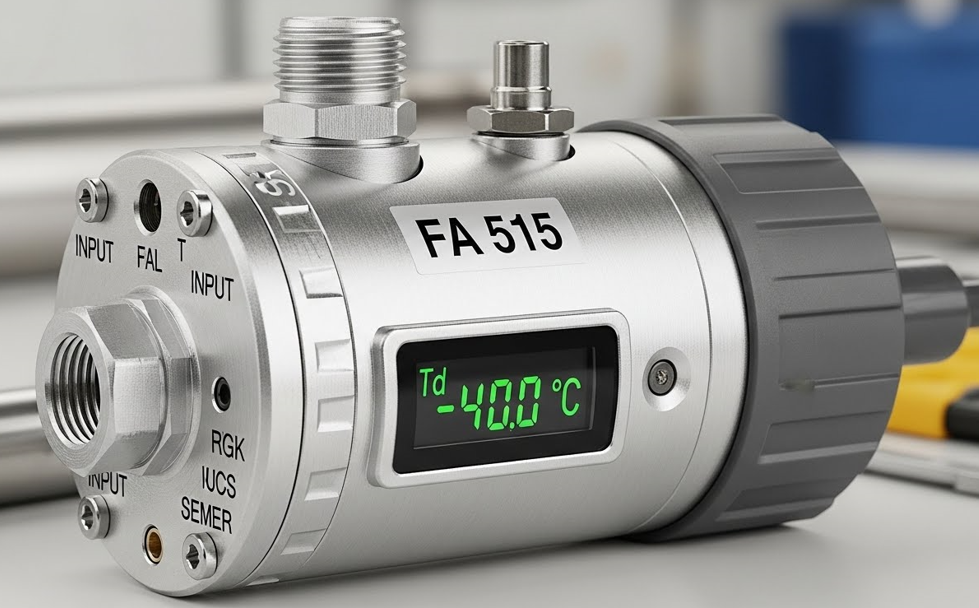
This is where the FA 515 Dew Point Sensor for Compressed Air comes into play. Positioned at key points in the system, it continuously monitors moisture levels, providing real-time data that helps operators prevent condensation, equipment corrosion, and system inefficiencies. By delivering reliable dew point readings, the FA 515 allows facilities to make informed decisions about dryer performance, filtration, and maintenance schedules.
Benefits of Continuous Dew Point Monitoring
Using a dedicated dew point sensor has multiple operational advantages:
-
Early detection of moisture breakthrough: Operators can identify when dryers or filters are underperforming before moisture reaches critical equipment.
-
Energy optimization: Avoid over-drying air, which reduces unnecessary electricity usage.
-
Predictive maintenance: Schedule maintenance based on real system performance rather than fixed intervals.
-
Enhanced product quality: Ensure compressed air meets required dryness standards, preventing contamination or defects.
These benefits translate into reduced downtime, extended equipment life, and more efficient operations across the facility.
Designed for Demanding Industrial Environments
Industrial compressed air systems are exposed to vibration, pressure fluctuations, temperature changes, and possible contamination. The FA 515 Dew Point Sensor for Compressed Air is designed to withstand these challenges without compromising accuracy.
Its robust construction allows installation in compressor rooms, along pipelines, or at critical point-of-use locations. This flexibility ensures moisture is monitored precisely where it matters most, protecting sensitive equipment and maintaining system integrity.
Supporting Quality Standards and Compliance
Many industries require strict control of compressed air quality to comply with internal standards or external regulations. For example, in pharmaceuticals, moisture can impact product safety; in food and beverage, it can promote microbial growth; and in electronics manufacturing, even tiny amounts of condensation can damage components.
The FA 515 provides continuous, verifiable dew point data, helping facilities maintain compliance with ISO standards and internal quality benchmarks. With documented air quality readings, operators gain confidence in the reliability and safety of their systems.
Energy Efficiency and Sustainability
Dryers are one of the largest energy consumers in compressed air systems. Without precise dew point feedback, operators may run dryers conservatively, consuming more energy than necessary.
With the FA 515 Dew Point Sensor for Compressed Air, facilities can optimize dryer performance by accurately tracking moisture levels. This reduces energy waste, lowers operational costs, and supports sustainability goals, all while maintaining the required air dryness.
Integration and Ease of Use
Modern industrial plants rely on centralized monitoring and automation. The FA 515 can be integrated seamlessly into control systems, allowing dew point data to be monitored alongside pressure, flow, and energy metrics.
Once installed, it requires minimal maintenance. Its stability over time reduces the need for frequent recalibration, giving operators continuous visibility into moisture levels without adding extra workload.
Early Detection and Risk Mitigation
Moisture-related damage often develops gradually. Corrosion spreads, valves stick, and contamination travels downstream. By continuously monitoring dew point, the FA 515 acts as an early warning system.
Operators can detect deviations before major problems occur, plan maintenance proactively, and prevent unplanned downtime. This proactive approach protects high-value equipment and ensures smoother, more reliable operations.
Trusted Support from JAMs
Even the best sensor technology achieves full value only when paired with expert guidance. Jams provides industrial measurement solutions, including the FA 515 Dew Point Sensor for Compressed Air. Their focus on quality, accuracy, and technical support ensures proper installation, calibration, and long-term reliability, helping businesses get the most from their dew point monitoring system.
Conclusion
Moisture may be invisible, but its impact on compressed air systems is significant and costly. Continuous dew point monitoring is essential for protecting equipment, maintaining product quality, and improving energy efficiency.
The FA 515 Dew Point Sensor for Compressed Air, combined with professional solutions from Jams, empowers industries to manage compressed air systems effectively. By transforming air quality management into a proactive, data-driven process, it ensures operational reliability, efficiency, and long-term performance.