Compressed air dryers play a critical role in maintaining dry, high-quality air for industrial applications. Moisture in compressed air can cause corrosion, equipment damage, inconsistent product quality, and costly downtime. Ensuring that dryers are functioning effectively is therefore essential to maintain operational efficiency and system reliability. Monitoring the dew point of compressed air provides actionable data to optimize dryer performance and prevent moisture-related issues before they escalate.
By continuously tracking the dew point, facilities can ensure that compressed air meets the required dryness levels, protect sensitive equipment, and avoid energy wastage. Real-time data enables operators to make proactive adjustments, improving both reliability and productivity.
Why Dew Point Monitoring is Vital
Dew point is the temperature at which water vapor in compressed air condenses into liquid. In dryer systems, knowing the exact dew point is essential because moisture accumulation can lead to corrosion, microbial growth, or frozen lines in cold conditions. Many industries, such as pharmaceuticals, electronics, and food and beverage, require extremely dry air to maintain product quality and comply with strict standards.
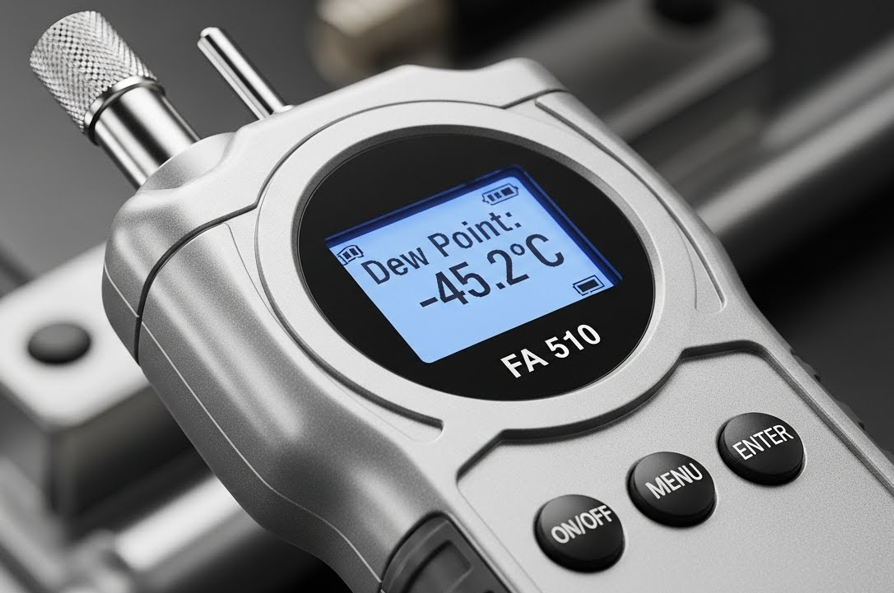
This is where the FA 510 Dew Point Meter for Dryers comes in. Installed at key points in the dryer system, it continuously measures moisture levels, providing accurate readings of the air’s dew point. This information allows operators to verify dryer efficiency, detect moisture breakthrough early, and take corrective action before issues impact operations.
Key Benefits of Using the FA 510
The FA 510 Dew Point Meter for Dryers offers several operational advantages:
-
Continuous monitoring: Provides real-time insight into moisture levels, avoiding reliance on periodic testing.
-
Early problem detection: Identifies dryer or filter inefficiencies before they reach critical equipment.
-
Energy optimization: Ensures dryers operate efficiently, preventing over-drying and reducing energy costs.
-
Improved product quality: Maintains consistent air dryness to prevent contamination or defects.
By leveraging these benefits, facilities can increase system reliability, reduce maintenance costs, and improve overall operational efficiency.
Designed for Industrial Environments
Dryers operate in harsh industrial conditions, including high pressure, vibration, and temperature fluctuations. The FA 510 is built to provide accurate, stable readings even under these challenging conditions.
Its durable construction allows installation directly in compressor rooms, along dryer pipelines, or at critical point-of-use locations. Monitoring moisture exactly where it matters ensures that sensitive equipment and processes remain protected, maintaining system integrity.
Supporting Compliance and Quality Standards
Many industries must meet strict air quality standards to comply with regulations and internal quality programs. In pharmaceutical and food production, moisture can compromise safety and product integrity. Electronics manufacturing demands ultra-dry air to prevent condensation and equipment damage.
The FA 510 Dew Point Meter for Dryers provides continuous, verifiable data, enabling facilities to meet regulatory and internal standards. Operators can demonstrate compliance confidently during audits while maintaining optimal air quality throughout the system.
Energy Efficiency and Cost Savings
Dryers are among the most energy-intensive components in compressed air systems. Without accurate dew point measurements, dryers may be run conservatively, consuming excess energy.
With the FA 510, operators can optimize dryer settings according to real-time moisture levels. This ensures the air is adequately dry without unnecessary energy usage, reducing operating costs and supporting sustainability initiatives.
Easy Integration and Low Maintenance
Modern facilities rely on centralized monitoring and automation. The FA 510 integrates seamlessly into control systems, allowing dew point data to be monitored alongside other parameters such as pressure, flow, and energy consumption.
Its long-term stability and low maintenance requirements reduce downtime and free up technical teams to focus on system optimization rather than frequent recalibration or troubleshooting.
Proactive Risk Management
Moisture-related damage often develops gradually, affecting pipelines, valves, and sensitive equipment. By continuously monitoring the dew point, the FA 510 acts as an early warning system.
Operators can detect deviations early, schedule maintenance proactively, and prevent unplanned downtime. This approach protects high-value assets and ensures smoother, more reliable operations.
Trusted Support from JAMs
Even the best sensor technology is only effective when paired with expert guidance. Jams provides reliable industrial measurement solutions, including the FA 510 Dew Point Meter for Dryers. Their focus on quality, accuracy, and technical support ensures proper installation, calibration, and long-term reliability, helping businesses maximize performance and operational confidence.
Conclusion
Moisture in compressed air can silently compromise system reliability, damage equipment, and affect product quality. Accurate, continuous dew point monitoring is essential to ensure dryers perform efficiently and effectively.
The FA 510 Dew Point Meter for Dryers, combined with the expertise and solutions from Jams, empowers industries to maintain dry, high-quality compressed air. By turning dew point data into actionable insights, it helps facilities optimize dryer performance, reduce energy consumption, and protect critical processes—ensuring reliability, efficiency, and long-term operational success.