Compressed air is often treated as an invisible utility, yet its quality has a direct and measurable impact on production reliability, product integrity, and regulatory compliance. In many industries, compressed air comes into direct contact with products, packaging, or sensitive equipment. Any compromise in air quality—especially excess moisture—can quickly turn into rejected batches, damaged machinery, or failed audits. This is why structured air quality monitoring has become a core requirement rather than an optional upgrade.
International standards exist to remove uncertainty from compressed air quality, and among them, ISO 8573 stands out as the global benchmark. It defines clear limits for contaminants such as particles, oil, and moisture. Dew point, in particular, plays a critical role in determining whether compressed air meets the required class. Without accurate monitoring, compliance becomes guesswork, and guesswork is costly.
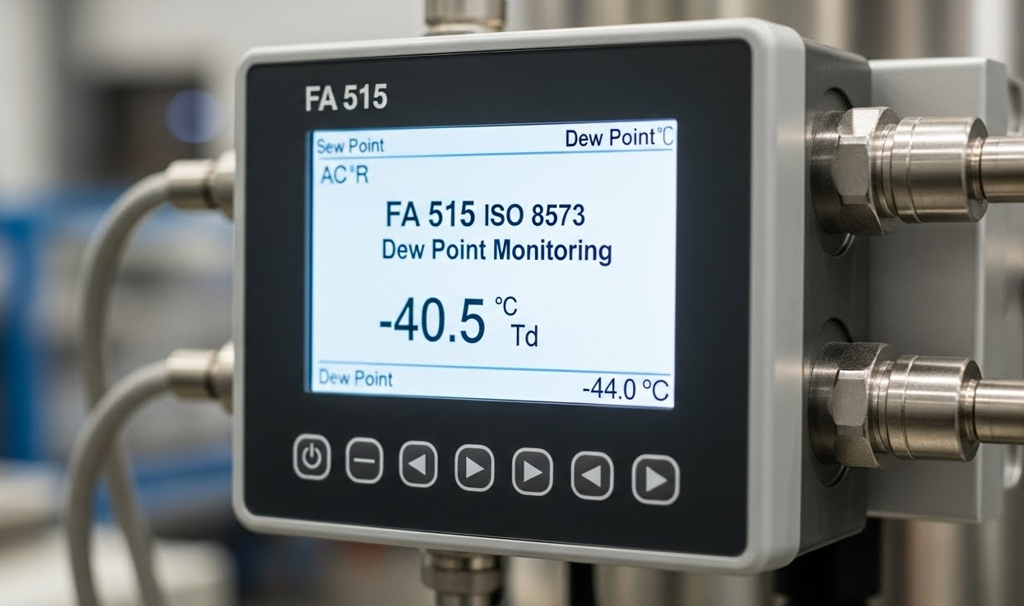
This is where FA 515 ISO 8573 Dew Point Monitoring delivers real value. Designed for precise and continuous moisture measurement, it enables industries to confidently verify compressed air quality against ISO 8573 requirements. Instead of relying on periodic checks or assumptions, facilities gain real-time visibility into what truly matters—air dryness where it counts.
Understanding ISO 8573 and the Importance of Dew Point
ISO 8573 is a multi-part standard that classifies compressed air quality based on three main factors: solid particles, oil content, and water. Dew point is used to define the water content class, making it one of the most critical parameters for compliance.
Each application has its own acceptable dew point range. For example, general manufacturing may tolerate higher moisture levels, while pharmaceutical, food, or electronics industries demand extremely dry air. Monitoring dew point ensures that the compressed air system consistently delivers air within the required class, regardless of changes in load or environmental conditions.
Without continuous dew point measurement, systems may drift out of compliance without warning. This creates hidden risks that only surface during inspections, failures, or quality incidents.
Why Continuous Monitoring Is Better Than Periodic Testing
Traditional approaches often rely on spot checks or manual testing during audits. While this may satisfy documentation needs temporarily, it fails to capture real operating conditions. Dew point can fluctuate throughout the day due to demand changes, dryer efficiency loss, or seasonal temperature shifts.
Continuous monitoring provides a complete picture. It captures trends, detects gradual degradation, and highlights sudden failures the moment they occur. This proactive approach reduces downtime, protects downstream equipment, and strengthens quality assurance programs.
FA 515: Precision Built for ISO 8573 Compliance
The FA 515 is specifically designed to support ISO 8573 dew point classification with high accuracy and long-term stability. It delivers reliable measurements that operators can confidently use for compliance verification and system optimization.
One of its strongest advantages is measurement consistency over time. Sensor drift can undermine compliance efforts by providing misleading data. The FA 515 minimizes this risk, ensuring that dew point readings remain dependable even in continuous industrial operation.
Its fast response time allows it to capture real changes in moisture levels, not delayed averages. This is especially important in applications where even short moisture spikes can cause damage or non-compliance.
From Compliance to Control: Using Dew Point Data Strategically
ISO compliance is often the starting point, not the end goal. Once accurate dew point data is available, facilities can move beyond compliance and into control.
With reliable dew point monitoring, teams can:
-
Optimize dryer performance based on real conditions
-
Detect early signs of dryer or filter failure
-
Reduce unnecessary energy consumption caused by over-drying
-
Improve documentation for audits and certifications
This data-driven approach transforms compressed air systems from reactive setups into controlled, predictable assets.
Designed for Real Industrial Environments
Industrial compressed air systems operate under constant stress—pressure variations, vibration, temperature swings, and potential contamination. The FA 515 is built to withstand these challenges without sacrificing accuracy.
Its robust construction supports installation in demanding locations, whether in central compressor rooms or critical distribution points. This reliability ensures that ISO 8573 compliance is maintained not just on paper, but in real operating conditions.
Supporting Quality-Critical Industries
Industries with strict quality requirements rely heavily on accurate dew point monitoring. In food and beverage processing, moisture can lead to microbial growth or product spoilage. In pharmaceuticals, air quality directly impacts patient safety and regulatory approval. Electronics manufacturing demands ultra-dry air to prevent condensation and component failure.
In all these sectors, ISO 8573 compliance is non-negotiable. The FA 515 provides the confidence needed to meet these expectations consistently, not just during inspections.
Easy Integration Into Monitoring Systems
Modern facilities increasingly depend on centralized monitoring and automation. The FA 515 integrates smoothly into existing measurement and control systems, making dew point data easily accessible alongside other key parameters.
Once installed, it operates with minimal intervention, allowing maintenance teams to focus on optimization rather than constant troubleshooting. This ease of integration supports long-term monitoring strategies without adding complexity.
Reducing Risk Through Early Detection
Moisture-related failures often escalate silently. Corrosion builds slowly, valves stick gradually, and contamination spreads unnoticed. Continuous dew point monitoring acts as an early warning system, alerting operators before damage becomes widespread.
By identifying problems at their source, facilities can plan maintenance, avoid emergency shutdowns, and extend the lifespan of expensive equipment. Over time, this preventive insight delivers substantial cost savings.
The Value of a Reliable Local Source
Even the most advanced monitoring technology depends on proper selection and support. Access to genuine instruments, technical understanding, and application guidance makes a critical difference in long-term success.
This is where Jams adds meaningful value. By offering trusted industrial measurement solutions and focusing on practical customer needs, JAMs supports businesses in implementing effective ISO 8573 monitoring strategies. Their approach emphasizes reliability, accuracy, and long-term performance rather than short-term fixes.
A Smarter Approach to Compressed Air Quality
As industries move toward higher efficiency, stricter standards, and greater accountability, compressed air quality can no longer be treated as an afterthought. Dew point monitoring is a foundational element of modern quality management systems.
The FA 515 supports this shift by delivering accurate, stable, and continuous data that aligns directly with ISO 8573 requirements. It empowers facilities to maintain compliance, optimize performance, and build confidence in their compressed air systems.
Conclusion
ISO 8573 sets the benchmark for compressed air quality, and dew point measurement is central to meeting that benchmark. Without accurate monitoring, compliance remains uncertain and risks remain hidden.
FA 515 ISO 8573 Dew Point Monitoring provides the clarity and confidence industries need to maintain clean, dry air under real operating conditions. When paired with the professional support and solutions available at Jams, it becomes part of a long-term strategy focused on quality, efficiency, and operational trust.